


LCD Splicing Screen
Description
Why Choose Us
Excellent Team
Excellent team,automatic management of production in first-rate ,R&D and production team
After-Sale Service
Professional and comprehensive after-sales system to ensure worry-free customer service
Quality Control
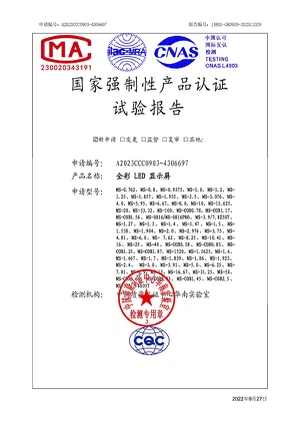
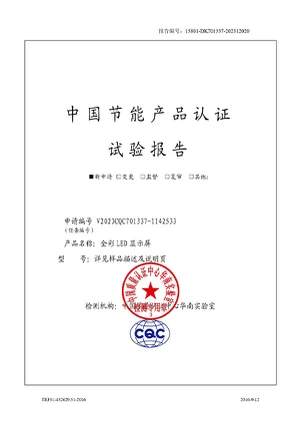
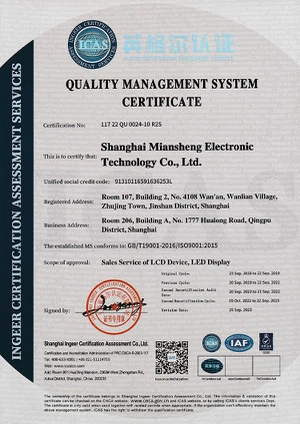
Obtained multiple system certifications,quality promised
Long Warranty
We are confident in the quality of our products and are willing to provide you with long-term technical service support.
LCD splicing screen can be used as a display alone, but also can be spliced into a large screen use. According to the different use requirements, to achieve variable large can also be changed to small hundred big screen function: Single screen split display, single screen alone display, any combination of display, full-screen LCD splicing, double splicing LCD screen splicing, vertical screen display, image border optional compensation or masking, support digital signal roaming, scaling stretch, cross-screen display, a variety of display pre-programmed settings and operation, full HD signal real-time processing.

OLED clear display is a large display wall formed by splicing multiple LCD screens. This technology can not only provide a large display area, but also ensure the clarity and color consistency of each screen, making the overall picture both grand and delicate. Large-screen display technology has become an important part of many fields such as commercial display, public information display, and security monitoring.

LCD splicing screen is a large display wall formed by splicing multiple LCD screens. This technology can not only provide a large display area, but also ensure the clarity and color consistency of each screen, making the overall picture both grand and delicate. Large-screen display technology has become an important part of many fields such as commercial display, public information display, and security monitoring.
High brightness
Compared with ordinary display screens, LCD splicing screens have higher brightness. The brightness of a regular display screen is generally only 250-300cd/㎡, while the brightness of a LCD splicing screen can reach 700 cd/㎡ or higher.
Image processing technology
The LCD splicing screen can enable clear reproduction of low pixel images on a full HD display screen; Deinterlacing processing technology to eliminate flicker; Deinterlacing algorithm to eliminate "aliasing"; Dynamic interpolation compensation, 3D comb filtering, 10 bit digital brightness and color enhancement, automatic skin color correction, 3D motion compensation, nonlinear scaling, and other internationally leading technology processing.
Better color saturation
At present, the color saturation of ordinary LCD and CRT is only 72%, while DIDLCD can reach 92% of High color saturation. This is thanks to the professional development of color calibration technology for products. Through this technology, in addition to color calibration for still images, it can also calibrate colors for dynamic images, ensuring the accuracy and stability of image output.
Uniform brightness
Due to the fact that every point on the LCD splicing screen maintains the same color and brightness after receiving the signal, unlike regular displays that require constant pixel refresh. Therefore, the LCD splicing screen has uniform brightness, high image quality, and absolutely no flicker.
Long service life
The service life of the backlight source for ordinary display screens is 10000 to 30000 hours, while the service life of the backlight source for high brightness LCD splicing screens can reach over 60000 hours. This ensures the consistency of brightness, contrast, and chromaticity for each LCD screen used in splicing displays after long-term use, and ensures that the service life of the LCD screen is not less than 60000 hours. LCD display technology does not have any consumables that require regular replacement, so maintenance and repair costs are extremely low.
Onstruction Scheme of Lcd Splicing Screen
Decoration suggestions
According to the accumulated experience of large LCD splicing display system engineering, the decoration suggestions are as follows:
- The whole decoration style is fresh, the color is cold, simple and bright is better.
- No matter what kind of material is used to decorate the ceiling, it can be milky white, silver gray or light gray, but it should be matte colored, and the surface must not have strong reflection.
- The color of the wall decoration board is bright, with deep lines, sound-absorbing materials in appropriate parts, and the wall is mainly matte.
- The floor is better to use anti-static floor, carpet, dark color, or other non reflective floor materials.
Requirements for indoor display system
- AC grounding resistance is not more than 1 Ω.
- The fire sprinkler must be away from the liquid crystal mosaic display wall about 1 meters, can not use sprinkler fire head, spray fire extinguishing agent.
- Power requirements: The power supply of the system is AC 220V 5%; three eye socket with protective grounding wire is used; the number of sockets is related to the number of display screen, and the splicing system, splicing controller and control PC are required to supply power in the same phase. The power supply voltage should be stable and reliable, especially to prevent power on immediately after power failure. Therefore, in principle, the power supply of large screen splicing display system must be supplied by UPS with corresponding power.
- Load bearing requirements: Long term load bearing 150kg / m2.
- The installation floor shall be flat and solid with strong bearing capacity; the rack shall be directly installed on the cement floor; if it needs to be installed on the floor, it needs to be strengthened under the floor.
- As the decoration wall of splicing wall, the wall should be firm, the windows should be straight and not deformed, and the network cable of the system should be connected to the position of the large screen controller.
- Large screen room requires constant temperature and humidity. Air conditioning should be installed behind the large screen. The best working environment temperature is 18-25 degrees, and the best working humidity is less than 60%.
- The large screen room should be kept clean and dustproof to ensure the cleanness of the screen and box.
- Large screen display wall to avoid direct light, shade with curtains.
- The machine room must be cleaned up before the large screen construction.
- After the user requests the maintenance, so the channel of at least 0.6 meters should be reserved behind the TV wall. If there is a console in the monitoring room, the installation height of the TV wall should be between 1.1 m and 1.2 m.
Requirements for lighting
- 1 meter in front of the screen is a dark area, so fluorescent tubes must not be installed. Can be installed with built-in downlight, parallel to the screen, to be separately controllable on and off. The light doesn't shine directly on the screen.
- The lights in the whole hall shall be controlled in groups parallel to the screen direction, and the light source with stronger light shall not be selected. The lighting layout principle is to make the working area have enough light intensity, but it will not have obvious impact on the screen.
- The light that may enter the hall on both sides (such as windows) should have necessary shielding (such as curtains, etc.).
Requirements for air conditioning
- The air outlet of the air conditioner (central air conditioner or cabinet type open space) located in the LCD splicing display wall room should be as far away from the LCD splicing display wall as possible (about 0.4m is better), and the air outlet should never blow directly against the LCD splicing display wall, but towards the direction far away from the LCD splicing display wall, so as to avoid damage caused by uneven cold and heat.
- The air conditioner (cabinet type machine) placed in front of the LCD splicing display wall should be blown away from the screen, not vertically to the screen, so as to avoid screen condensation.
- The air outlet of the air conditioner in front of the LCD splicing display wall (on the ceiling) shall be no less than 1m away from the screen.
The display technology is different
The LCD splicing screen adopts the LCD display technology composed of LED back luminous, which is composed of the LCD layer backlight plate, etc., like our commonly used TV, computer display, mobile phone screen and so on are this kind of luminous technology. The difference is that the panel of LCD splicing screen has been industrial processing, which is relatively more durable and can meet the requirements of continuous boot.
The LED screen uses light light beads composed of three primary color chips, consisting of individual lamp beads forming a unit board of different sizes to display the image.
Different technical characteristics
The advantage of LCD splicing screen is high resolution, single screen can reach 1920 * 1080, belongs to high-definition large screen products. In addition, its brightness is moderate, suitable for long-term viewing, its contrast can also reach 5000:1, rich color. At the same time, it also has the function of splicing, so multiple LCD splicing screens can form a screen of any size, and can display a large image across the screen, or display multiple small pictures at the same time. If used for monitoring the display, you can also achieve segmentation and other display.
But its only drawback is that there is a patchwork, there will be certain visual obstacles. At present, the smallest stitching is 0.88mm LCD splicing screen, mostly used in conference rooms, exhibition halls and other occasions.
The biggest advantage of LED splicing screen is no stitching and waterproof. No matter how, there is no visual barrier in the middle of the screen, so the integrity is better. It can also be installed on outdoor occasions because it is waterproof.
Application occasions are different
According to their different display characteristics, it also determines their different applications, because the LCD splicing screen has high definition, moderate brightness, splicing, and support continuous boot, so its main application occasions for the conference room, monitoring room, exhibition hall, big data and other platforms.
Because the whole screen display of LED is good, and in order to reduce the impact of low resolution on users, it is mostly used for long-distance viewing occasions, and mainly for advertising, such as advertising, video and so on. More often seen in outdoor squares, stages, shopping malls and so on.
Three Splicing Methods of Lcd Splicing Screen
Outward towing splicing manipulator type
The outer drag splicing manipulator can also be called large screen flash splicer or TV wall manipulator, TV wall splicer, its primary function is to a flawless image signal difference into N blocks after distribution to N video flash units (such as rear projection units), finished with a number of the usual video units constitute a large screen.
Embedded
Embedded splicing screen operating principle is that each splicing unit has an independent video processing module, through the matrix will be flawless signal transport to each unit, and each video processing, cut from their own should flash that part, and this part of the signal expansion after the flash, complete the intention of large screen splicing flash. Because of the respective processing, so the number of spliced units can be theoretically unlimited.
PCI plug-in type
PCI plug-in operation principle is through the industrial control machine, the use of a multi-screen splicing card, first a flawless video image cut into M * N sub-video signal, and then these sub-video signals are transmitted to the splicing curtain wall on each corresponding unit, complete the intention of large screen splicing flash. It can support a variety of video equipment access together, to arrive at the LCD splicing large screen function requirements. "The reason why it is called outside the drag, because this type of splicing curtain wall is divided into two independent parts, one is the flashing part, which can be composed of the usual large screen splicing flashing units such as LCD LCD splicing screen; another part is this splicing manipulator, its function is to complete a number of physical output group constitutes a resolution after iteration of the flashing output, so that the screen flashing an image. "
There Are Six Differences Between Lcd Splicing Screens and LED Display Screens with Small Spacing
Differences in technology
Principles of display
LCD LCD splicing screens belong to backlight+LCD imaging, and LED displays with small spacing belong to self-illumination. The LED display screen with small spacing has no seam, and the LCD LCD splicing screen gap is 0.88-3.5mm.
Saturation of colors
The color restoration and brightness of small-spaced LED displays are higher.
Grayscale
LED display screens with small spacing are 16bits, while LCD splicing screens are 8bits.
Consumption of energy
Energy-saving LED display screens and LCD LCD splicing screens have small spacing.
Thickness difference between products
LCD splicing screens are much thicker than small-space LED displays, and small-space LED displays have reached ultra-thin designs now.
A small spacing LED display screen all-in-one machine has an ultra-narrow frame of only 3mm, and an ultra-thin structure with an overall thickness of only 38.5mm.
Difference in cost
Currently, there are three main costs. A purchase cost is the first cost, a maintenance cost is the second cost, and a service life is the third cost.
Cost of purchase
LCD splicing screens are new and more competitively priced. Costs associated with maintenance;
Costs associated with maintenance
Small spacing LED devices only need to repair the broken module separately, which does not affect use, and maintenance costs are low; LCD splicing screens: most faults cannot be repaired, and only the whole screen can be replaced;
Life expectancy
A small spacing LED display screen has a normal service life of 100000 hours, and an LCD splicing screen has a normal service life of 40000 hours.
Luminosity
Users need not worry about insufficient brightness with LCD panels and LED panels. High brightness and small spacing LED display screens, however, face the problem of high brightness. The display environment must be considered before choosing LED display screens. According to the needs of users, LCD manufacturers designed displays with brightness levels of 500cd/m2 and 700cd/m2, which make 55-layer LCD displays much more useful than LED displays.
Power resolving
In recent years, LED splicing screens have made great strides, but they still cannot compete with LCD screens. The resolution of LCD displays is generally 1920 x 1080p, and some LCD displays can already display 4K video. In order to achieve a higher resolution, it is necessary to increase the geometric base, reduce the pixel distance by 50%, and increase the base plate density by four times. In spite of bottlenecks at 1.0, 0.8, and 0.6, the real reason for a large number of applications is products like 3.0/2.5. Of course, this does not mean that clearer users cannot use it. Most users only use the splicing screen at ordinary resolution. In general, the higher the clarity, the more difficult it is to overcome this technology, and the more expensive the equipment is. As a result, many users do not choose high resolutions.
Display functions differ
Despite the fact that LED and LCD displays are mosaic screens, most of which are controlled by display controllers, their display functions are completely different. When the signal source is LED display, for example, the window can be realized by the processor roaming and multi-screen display at the same time.
In addition to supporting single-screen display signals, single-screen splicing multichannel signals, cross-screen splicing and roaming display effects, the Lot splicing screen can also be fused into a large screen display. Multiple signal sources of a single signal source can be displayed at the same time and decoding display can be achieved.
Maintenance methods differ
LCD splicing screens generally operate in post-maintenance mode – maintenance access is reserved at the back. Maintenance access must be left about 70cm to 1m wide at the back of the screen, which requires high construction space and will reduce visible space to a certain extent.
LED display all-in-one machine with full front maintenance, support hot plugging, no need to reserve maintenance channels, convenient maintenance, space saving, full front maintenance.
The environment in which the product is used varies
Since LCD splicing screens contain many electronic components, they can only be used indoors. As with all electronic products, it does not have waterproof characteristics, so it can only be used indoors in dry environments.
Because of its special structure, the small spacing LED display can be used indoors or outdoors. After adding waterproof measures, it can be used outdoors.
Do not point at the screen with hard objects such as fingers, especially sharp objects. The LCD splicing screen is very delicate, the resistance is poor, and the pointing is easy to add dead pixels, which is why some users will find more and more shortcomings after using it for a period of time. In the active state, do not open the LCD splicing screen of the back cover. The residual transient voltage is high even after a power outage. The CFL transformer in the backlight assembly still has a high voltage of around 1000 V.
Try to keep the product as dry as possible, because the most feared electronic product is water. The internal design of the LCD splicing screen is very accurate. If the environment is humid, it is easy to oxidize and corrode, causing short circuits, etc., which will bring huge economic losses to users. If you notice moisture on the screen surface, please wipe it gently with a soft cloth before turning on the power. If moisture enters the LCD splicing screen, it must be placed in a well-ventilated or warm place to allow its moisture to evaporate. Do not let the LCD screen work without removing moisture, otherwise the LCD electrodes will corrode and the LCD screen will be permanently damaged.
Wipe gently with a soft cloth. The LCD splicing screen has been used for a long time, and there will be a lot of dirt on the surface. Cleaning the surface of the LCD splicing screen is inevitable. Use a reasonable cleaning method when cleaning: use a soft non-fibrous absorbent cotton, lens paper or soft cloth to absorb a small amount of glass cleaner and gently wipe the screen of dust or dirt. Therefore, when using the LCD splicing screen for daily maintenance, please pay attention to the maintenance work. Be sure to wipe lightly. Remember to press firmly on the surface of the LCD splicing screen.
Our Factory
Shanghai One Plus One Electronic Technology Co.,Ltd is a foreign trade subsidiary of Shanghai Miansheng group located in Shanghai,China.One Plus One constantly actively adapt to the global economic development trend,promote the enterprise in transforming and upgrading,enhance the comprehensive strength of the enterprise and the brand status of the company.Shanghai One Plus One Electronic Technology Co.,Ltd has gradually become one of the brand companies in the field of global business display.

Certificate






FAQ
Q: What are the main application scenarios of LCD splicing screens?
Q: What are the advantages of LCD splicing screens compared to other large screen technologies?
Q: How to choose the signal source for LCD splicing screen?
Q: How to connect the LCD splicing screen to the computer?
Q: What should I do if the LCD splicing screen flickers?
Q: How to reduce the splicing gap of LCD splicing screen?
Q: Can the LCD splicing screen be turned on for a long time?
Q: What should I do if the colors of the LCD splicing screen are uneven?
Q: How to deal with internal contamination of the LCD splicing screen?
Q: What should I do if the background color of the LCD splicing screen is different?
Q: How to deal with scratches on the pins of the LCD splicing screen?
Q: What should I do if the image on the LCD splicing screen has no sound?
Q: Can the LCD splicing screen be connected to multiple signal sources?
Q: How to choose the resolution of LCD splicing screen?
Q: How to adjust the brightness of the LCD splicing screen?
Q: What are the installation methods for LCD splicing screens?
Q: How long is the maintenance cycle for LCD splicing screens?
Q: Can the LCD splicing screen be connected to a wireless network?
Q: What is the energy consumption of LCD splicing screen?
Q: How is the after-sales service for LCD splicing screens?
Hot Tags: lcd splicing screen, China lcd splicing screen manufacturers, factory, Small Pitch Led Display, crystal film screen, Special Shape LED Display, transparent led film display screen, outdoor transparent led display, square led monitor
Previous
OLED Clear DisplayNext
LCD Splicing ScreenSend Inquiry


