



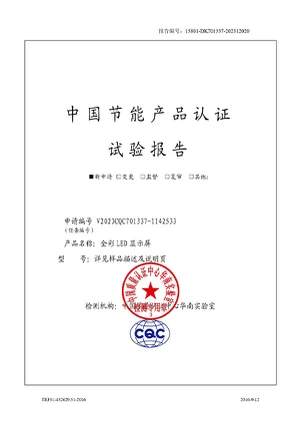
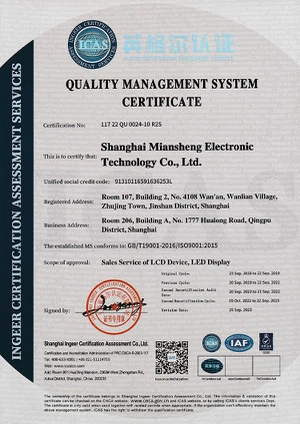
As a world-renowned brand in the field of commercial display, ONE&ONE owns Excellent team,automatic management of production in first-rate ,R&D and production team,obtained multiple system certifications,quality promised.
ONE&ONE provide professional and comprehensive after-sales system to ensure worry-free customer service and competitive prices to everyone.We are confident in the quality of our products and are willing to provide you with long-term technical service support.
If you are interested in high-tech outdoor shopping mall screens, display screens used in chain stores to allow customers to feel the efficacy of products more intuitively, displays made into spheres or other shapes, etc, please feel free to contact us.


What Is Splicing Screen

A splicing screen is a complete unit of LCD video wall, both individually as a monitor, but also to a large screen LCD splicing use. According to different needs and achieve big variable is also variable small, variety features: a single split-screen display, single-screen alone, any combination of display, full-screen LCD splicing, vertical screen display.
Types of Splicing Screens

LED display splicing screen
LED display adopts large-scale integrated circuits, which greatly improves the reliability and facilitates debugging and maintenance. All-weather work is fully adapted to various harsh outdoor environments, waterproof, moisture-proof, anti-corrosion, lightning protection, strong overall performance of earthquake resistance, strong luminous brightness, and the display content is clearly visible when the sun is directly on the surface of the screen within the visible distance, and cost-effective.
LED display has slim structure, light weight, but stable. It can be customized into any shape such as sphere, cylinder, circle, triangle, etc. It can be used for indoor and outdoor. It is easy to install and maintain. It leaves no gap between each panels. It has long life span. It has shortest response time. But It is expensive in close viewing distance and small pixel pitch such as P1, P1.25 etc.

LCD splicing screen
LCD splicing screen has low power consumption, light weight, and long life (normally work for 50,000 hours), Non-radiation, high definition, high brightness, high color saturation, high contrast, high resolution and a series of high-quality display advantages, which are highly praised and respected by the large-screen market, and are widely used in security, advertising media, Entertainment and culture, command centers, coal mines and many other industries.
At present, LCD splicing screens can be spliced arbitrarily according to customer needs, up to 10X10 splicing. And secondly, LCD splicing screens use LED backlight to emit light, with a life span of up to 50,000 hours. The life of the backlight source is ten times that of the rear projection bulb compared to DLP and PDP. In addition to the high definition, high brightness, high color saturation, high contrast, and high resolution of LCD splicing, the life of the LCD is very long.

DLP splicing screen
The DLP splicing screen is formed by splicing multiple rear projection display panels. Its main feature is the large screen size and small gaps. Although there will be gaps between the display panels, the physical splicing gaps between the panels can be within 0.5mm. However, the DLP splicing screen still has some fatal shortcomings. Because the DLP display uses multiple display panels to splice, the color and brightness will be uneven when the number of splicing screen is reached, and the power consumption is high, and the internal luminous bulb is continuously working after 6000-8000 hours, the brightness will decrease. In order to maintain a better display effect, the light bulb needs to be replaced, so the maintenance cost is much higher. In addition, due to the large thickness of the DLP splicing panel, it is necessary to leave enough space on the back, which is also a problem for some environments with relatively small space.

PDP splicing screen
Since the PDP does not require a background light source for light emission, there is no LCD display viewing angle and brightness uniformity problem, and higher brightness and contrast ratio are achieved. The design of the three primary colors sharing the same plasma tube also avoids focusing and convergence problems and can achieve very clear images. Compared with LCD display technology, the larger the screen of the PDP, the higher the depth and fidelity of the image. In addition to the advantages of brightness, contrast, and viewing angle, PDP technology also avoids the response time problems in LCD technology, and these characteristics are the most important factors in dynamic video display. PDP monitors have no scan line scanning, which is completely pixel-to-pixel, so the image is clear and stable without flicker, and will not cause eye fatigue. PDP is also free of X-ray radiation. Because of these two characteristics, PDP can be called a truly green display product.
Advantages of Splicing Screen
High resolution
This is one of the most significant advantages of a splicing screen over an LED screen. A single pixel cannot be resolved on a led screen, but it can be on a splicing screen. It is also possible to superimpose the resolution to display at full HD or higher resolutions with a splicing screen, whereas this is not possible with LED screens. Clarity is thus very high in the case of a splicing screen.
01
Proper brightness
An important aspect of good image quality is appropriate brightness. With LED screens, the luminance level varies significantly based on the angle from which the screen is being viewed, making them unideal for long-term viewing. However, with a splicing screen, there are no such variations, and uniformity ensures no glaring differences when viewed from any angle.
02
High contrast ratio
Splicing screens usually have a high contrast ratio. The figures vary from 1200:1 to 10000:1 for an LCD panel.
03
Reliability
With a considerably low usage rate, splicing screens can last up to five times longer than an LED screen before showing signs of wear and tear. It is also more expensive, so there is less chance of replacement costs than LED screens.
04
Adaptable screen
Due to its ability to support various formats, a splicing screen is much more adaptable than an LED screen. You can even display signals from several input sources by switching a matrix.
05
The Characteristics of Splicing Screen
1.High brightness,high contrast: Splicing screen has higher brightness, different from ordinary TV and PC LCD screen OTV or PC LCD screen brightness is generally only 250~300cd/m2, and screen brightness can reach more than700cd/m2.splicing screen has a contrast ratio of 1200:1, even up to 10000:1 contrast ratio, which is more than twice as high as the traditional PC or TV LCD screen and three times that of the general rear projection.
2.High-quality color calibration technology ensures accurate and stable image output:Thanks to the color calibration technology professionally developed for DID products, through this technology, in addition to color calibration of still pictures, it is also possible to calibrate the color of dynamic pictures. This ensures accurate and stable picture output.
3.High color saturation:In terms of color saturation.DIDLCD can reach 80%-92% high color saturation, while the current color saturation of ordinary CRT is only about 50%.


4.Uniform brightness, stable image without flickering: Because each point of the LCD maintains that color and brightness after receiving the signal, unlike CRT, which needs to constantly refresh the pixel points. As a result, LCD brightness is uniform, image quality is high, and flicker-free is absolutely flicker-free.
5.120HZ frequency doubling refresh rate, DID product's 120Hz frequency doubling liquid crystal display technology
• Can effectively solve the smearing and blurring during the rapid movement of the image
• Enhance the clarity and contrast of the image
• Make the picture clearer
• The human eye is not easy to fatigue after watching for a long time.
6.The viewing angle is wider, using this technology:The viewing angle can reach double 180°(horizontal and longitudinal), through the application of PVA technology, that is, "image vertical adjustment technology", the splicing screen has a wider viewing angle.
7.Pure flat display, LCD is the representative of flat panel display equipment, is a real flat display, completely no curvature large picture no distortion.
8.Ultra-thin narrow side design, splicing screen not only has the characteristics of ultra-large display area, but also has the advantages of ultra-light and thin. It can be easily spliced and installed. Splicing dedicated LCD screen, its excellent narrow edge design, so that the edge of the single piece is even less than 1 cm, so that the small edge effect will not affect the overall display effect of the entire display.
9.High service life, the service life of DIDLCD LCD backlight can reach more than 5-100,000 hours. This ensures the consistency of brightness, contrast and chromaticity of each LCD screen used in the splicing display screen after long-term use, and ensures that the service life of the display screen is not less than 50,000 hours.
10. Better reliability,ordinary LCD screen for TV,PC monitor design does not support continuous use day and night. ID LCD screen for monitoring center.display center design, support 7x24 hours continuous use.

What Technologies Can Achieve Seamless Lcd Splicing Screens?

Optical seamless splicing screen technology
Using the principle of light refraction to achieve seamless display is different from LFD electronic compensation technology. Simply put, it means adding a specially customized optical glass in front of the LCD splicing screen, and then achieving seamless splicing through light refraction. This type of glass not only has a unique craftsmanship, but also has all four sides. It can be integrated with the LCD screen to achieve refraction, presenting a seamless effect through the refraction of light and perspective.
Electronic seamless splicing screen technology
Implemented using the fusion technology of LCD screen and LED. A transparent light emitting body composed of small pitch LEDs has been added to the border of the LCD splicing screen, which is controlled by the splicing machine processor to restore the blocked image of the LCD, thus achieving the principle of synchronous lighting and removing seams. The key point of this technology is how to integrate small pitch LED and LCD to achieve uniform brightness, because the brightness of small pitch LED is generally higher, and only by achieving uniform brightness can the display be more uniform.

Splicing Screen Vs. Led Screen: Differences And How To Choose
| products |
 |
 |
| Model number | Splicing Screen | Led Screen |
|
Display Technology |
Splicing screens, also known as LCD video walls, are made by integrating multiple LCD panels together to create a larger display. These panels are typically connected through a seamless bezel-to-bezel process, which eliminates gaps between the screens and ensures a uniform look. Splicing screens use Liquid Crystal Display (LCD) technology, which offers vibrant colors and high resolution, ensuring excellent image quality. The narrow bezels of splicing screens create an immersive visual experience by minimizing distractions. |
On the other hand, LED screens are composed of light-emitting diodes (LEDs) that individually emit light, eliminating the need for a backlight. LED screens offer exceptional brightness levels, making them ideal for outdoor signage and large-scale displays. Thanks to their modular construction, LED screens are versatile and can be customized to meet specific display requirements. While LED screens may not offer the same level of resolution as splicing screens, they compensate with their brightness and adaptability. |
|
Image Quality |
When it comes to image quality, splicing screens excel due to their LCD technology. With high pixel density, these screens produce sharp and detailed images, ensuring an optimal viewing experience even at close distances. Additionally, the seamless integration of LCD panels in a splicing screen reduces display inconsistencies and delivers a uniform visual output across the entire video wall. The colors are vivid, and the contrast ratio is commendable, enabling true-to-life visuals that are perfect for indoor environments, such as control rooms, meeting rooms, and retail spaces. |
While LED screens may not have the same level of pixel density as splicing screens, they compensate with their brightness and color saturation. The individually emitting LEDs generate vibrant colors and high contrast ratios, resulting in stunning visuals that grab attention in both indoor and outdoor settings. LED screens are particularly favored for outdoor advertising, stadiums, and events where brightness and visibility in varied lighting conditions are crucial. |
|
Flexibility and Scalability |
Splicing screens offer exceptional flexibility and scalability, as they are available in various sizes and configurations to fit different spaces. These screens can be expanded by adding more LCD panels, allowing seamless expansion of the video wall without any gaps or disruptions. Whether you require a small video wall for a control room or a large one for a hotel lobby, splicing screens can be customized to meet your specific layout and size requirements. |
LED screens are highly flexible and scalable, thanks to their modular nature. The individual LED modules can be combined and arranged to create displays of virtually any size and shape. Moreover, LED screens can be easily disassembled and reconfigured when needed, making them suitable for temporary events and installations. The ability to create curved, cylindrical, or irregularly shaped displays gives LED screens an edge in terms of design possibilities and adaptability to architectural constraints. |
|
Energy Efficiency and Lifespan |
Splicing screens have lower energy requirements compared to LED screens. LCD technology consumes less power, making them more energy-efficient, which can result in significant cost savings in the long run. Additionally, LCD panels have a longer lifespan, typically ranging from 50,000 to 100,000 hours. This longevity ensures that your investment in a splicing screen will last for several years without the need for frequent replacements. |
LED screens are highly energy-efficient due to their low power consumption. LED technology allows individual LEDs to be turned on or off, resulting in less energy being wasted on generating unnecessary light. LED screens also have an impressive lifespan, typically lasting between 50,000 and 100,000 hours. The longevity, combined with energy efficiency, makes LED screens a reliable and cost-effective choice for long-term usage. |
|
Cost Considerations |
While splicing screens offer superior image quality and seamless integration, they tend to be more expensive than LED screens. This is primarily due to the use of LCD panels and the complex bezel-to-bezel integration process. However, the higher initial investment can be justified by the excellent image quality, longevity, and flexibility of splicing screens, especially if your application requires a premium display. |
LED screens are generally more cost-effective compared to splicing screens. Their modular construction and simplified design contribute to lower production costs. Consequently, LED screens are suitable for businesses and individuals with budget constraints, as they provide an affordable option without compromising on brightness and versatility. The cost-effectiveness of LED screens makes them an attractive choice for large-scale displays, outdoor installations, and applications requiring frequent reconfigurations. |
How to Choose the Lcd Splicing Screen and LED Splicing Display Screen?
The display technology is different
- The LCD splicing screen adopts the LCD display technology composed of LED back luminous, which is composed of the LCD layer backlight plate, etc., like our commonly used TV, computer display, mobile phone screen and so on are this kind of luminous technology. The difference is that the panel of LCD splicing screen has been industrial processing, which is relatively more durable and can meet the requirements of continuous boot.
- The LED screen uses light light beads composed of three primary color chips, consisting of individual lamp beads forming a unit board of different sizes to display the image.
Different technical characteristics
- The advantage of LCD splicing screen is high resolution, single screen can reach 1920 * 1080, belongs to high-definition large screen products. In addition, its brightness is moderate, suitable for long-term viewing, its contrast can also reach 5000:1, rich color. At the same time, it also has the function of splicing, so multiple LCD splicing screens can form a screen of any size, and can display a large image across the screen, or display multiple small pictures at the same time. If used for monitoring the display, you can also achieve segmentation and other display.But its only drawback is that there is a patchwork, there will be certain visual obstacles. At present, the smallest stitching is 0.88mm LCD splicing screen, mostly used in conference rooms, exhibition halls and other occasions.
- The biggest advantage of LED splicing screen is no stitching and waterproof. No matter how, there is no visual barrier in the middle of the screen, so the integrity is better. It can also be installed on outdoor occasions because it is waterproof.But its defects are also more obvious, such as low resolution, close look leads to poor clarity. Next brightness is too high, long time to watch dazzling serious. And it also has a large number of dead light probability, with the passage of time, there will be many light beads fall off, not bright, and so on, affecting the visual viewing experience.
Application occasions are different
- According to their different display characteristics, it also determines their different applications, because the LCD splicing screen has high definition, moderate brightness, splicing, and support continuous boot, so its main application occasions for the conference room, monitoring room, exhibition hall, big data and other platforms.
- Because the whole screen display of LED is good, and in order to reduce the impact of low resolution on users, it is mostly used for long-distance viewing occasions, and mainly for advertising, such as advertising, video and so on. More often seen in outdoor squares, stages, shopping malls and so on.


Therefore, the choice of which large screen technology to use, mainly depends on where we use it, if it is outdoor, directly choose the LED splicing screen. If use indoor, it depends on the specific purpose and viewing distance, if it is used to video surveillance display, small and medium-sized conference room, exhibition hall, big data, can choose small stitching LCD screen, and if it is used to indoor advertising, such as large conference, party, hall publicity can use LED screen. How to choose the LCD splicing screen and LED splicing display screen? This time you have the answer in your heart!
How To Choose A Splicing Screen Or Led Screen In The Conference Room?
Splicing screens for small and medium conference rooms
Because the resolution of the Splicing Screen is high and the brightness is suitable for long-term viewing, it is more suitable for use in small and medium-sized conference rooms at close distances, such as conference rooms with less than 30 people in an enterprise. Usually, the viewing distance of about 3-5 meters is better, the colors are richer and the visual experience is better.
Large-scale conference lecture halls and other LED display screens
If it is a large lecture hall in the government, hotel, school, or other fields, such as a conference room that can accommodate more than 100 people, because the viewing distance of the user is usually far away, the requirements for clarity are not particularly high, and LED display can be considered at this time. Because the whole screen usually displays a large picture on such large-scale occasions, the advantage of the led display without seams will be more suitable.

Detailed Explanation Of Lcd Splicing Screen Installation Tutorial
1. First, confirm the fixing method of the LCD splicing screen, whether to use a floor bracket or a cabinet, or a wall mount, and measure the distance from the bracket to the back wall (at least one person can be accommodated in the back for maintenance)
2. The bracket must be firm, and the bearing weight is determined according to the size and quantity of the LCD video screen, which is generally 1.5 times the weight of the screen, so that it is stable up, down, left, right, front, and back.
3. After the bracket is installed, start to install the screen. The screen installation sequence is from left to right, and from bottom to top. Adjust the gap between the screen and the screen to ensure horizontal and verticality.
4. After the screen is installed, it is the wiring. Generally, the network cable is used as the control line between the splicing screens. Each screen is connected in series with the network cable. The network cable of the first screen should be connected to the serial port on the computer, so that the entire screen can be controlled.
5. How to connect the signal line: Each screen needs to insert a signal line. Now the HDMI high-definition line is used more in the world. The signal lines on the screen are connected to the distributor or matrix or multi-screen processor, so that each screen The screen can complete the display image.
6. Debugging stage: After the screen is powered on, the screen can be debugged. Each screen displays the address code through the computer serial port, assigns the location of the screen, and sends instructions to it, and the screen debugging is completed.
Splicing Screen 4 Big Maintenance Methods

Avoid strong impact

Use the environment to keep dry

The correct cleaning splicing screen
Do not use organic chemical solvents such as alcohol, and do not use rough cloths or paper products when cleaning, as these materials are prone to scratches and affect the display.

Pay attention to the use of time, avoid prolonged work
The Difference Between Splicing Screen Matrix and Processor
In the splicing screen control system, matrices, processors, and controllers are commonly used. However, there are still significant differences between splicing screen matrices and splicing screen processors and controllers. The devices used for LCD or LED in different applications are also different. However, it is basically only necessary to choose among these devices, which are mostly used in LCD splicing screen display systems, and the signal source is mainly computer signals, The choice of which product to use mainly depends on objective factors such as the display purpose and the category and quantity of signal sources.
The splicing screen matrix, also known as high-definition matrix, usually uses DI interface input and output, so the EDI matrix is currently mainly used in the industry. Its input and output interfaces are more than 4, supporting multiple computer inputs and switching, and simultaneously outputting to multiple splicing screens for display, achieving signal control and switching functions. It is mainly used for connecting computer signal sources at the front end and connecting splicing screens at the back end, It is a control device mainly used in LCD splicing screen systems.
Matched screen matrix display function
And the splicing screen processor, also known as an image processor or external splicing processor, is a more powerful central processing device. It adds more diverse image processing functions on top of the matrix function, such as being able to connect to multiple computer signals and switch, and can also achieve functions such as cross screen, roaming, segmentation, stacking, and picture in picture, which is equivalent to its more comprehensive functions, This is the biggest difference between the splicing screen processor and the splicing screen matrix. So in some large-scale command and dispatch centers and other splicing screen display projects, users have multiple computer signals that need to be switched, and also need functions such as roaming and stacking. The use of splicing screen processors is very widespread.
Splice screen processor function
The splicing screen controller mainly refers to the control box behind the splicing screen, which is not a separate device. It is usually integrated with the panel of the splicing screen, and is mainly responsible for the input of power and signal. The power first passes through the controller before entering the splicing screen, and the signal source is also the same because the splicing screen is only responsible for display, and controlling the splicing between various splicing screens still needs to be achieved through the controller. However, generally, when selling products, splicing screen manufacturers integrate the splicing screen and controller, as it involves compatibility and ensures the normal input and control of signals.
So, the difference between the splicing screen matrix and the splicing screen processor is mainly in terms of functionality. The matrix is only used in L-splicing screen systems where the front-end input signal source is multiple computers, responsible for signal switching display, and can achieve both single screen and full screen display effects. The splicing screen processor has stronger functions, which can be used in both LCD splicing screens and LD splicing screen display systems. It can achieve the processing and distribution of monitoring signals and computer signals, and can achieve a wider range of display functions, meeting the needs of large-scale monitoring command and data display systems. So their differences are quite obvious. In addition, the splicing screen matrix and splicing screen controller are completely different products. The former is responsible for signal switching and display, while the controller is a part of the splicing screen.

Our Factory
Shanghai One Plus One Electronic Technology Co.,Ltd is a foreign trade subsidiary of Shanghai Miansheng group located in Shanghai,China.One Plus One constantly actively adapt to the global economic development trend,promote the enterprise in transforming and upgrading,enhance the comprehensive strength of the enterprise and the brand status of the company.Shanghai One Plus One Electronic Technology Co.,Ltd has gradually become one of the brand companies in the field of global business display.

Certificate







FAQ
Q: What is Splicing Screen?
Q: There is no temperature limit for the LCD splicing screen application?
Q: The larger the size of the LCD splicing unit, the greater the power consumption will be?
Q: What types of splicing screens are there?
Q: How is the resolution of the splicing screen calculated?
Q: How to choose the appropriate splicing screen size?
Q: What are the installation methods of splicing screens?
Q: What should you pay attention to when using splicing screens?
Q: What is the lifespan of a splicing screen?
Q: How to maintain the splicing screen?
Q: How to calibrate the splicing screen?
Q: How to deal with the splicing screen failure during use?
Q: How to display multiple images on a splicing screen?
Q: How to improve the display effect of splicing screen?
Q: How to deal with color difference in splicing screen?
Q: How to control the splicing screen remotely?
Q: What video formats does the splicing screen support?
Q: What factors affect the display effect of splicing screens?
Q: What should I do if the splicing gap is too large or the screen alignment is inaccurate?
Solution: Reinstall the video wall, making sure the edges of each screen are aligned. Adjust the settings of the video wall controller for fine adjustments.
Q: How to deal with uneven brightness or backlight issues?
Solution: Check whether the backlight unit is working properly and ensure that the power supply is stable. If there is a backlight failure, the backlight module may need to be replaced.
We're well-known as one of the leading splicing screen manufacturers in China. Please rest assured to buy discount splicing screen for sale here from our factory. For price consultation, contact us.
Flexible LED Panel Screen Display, creative video wall, rental outdoor led display